
What is a Demat Account? Complete Beginner’s Guide (2026) – Copy

Introduction
FINLITXPERT Course Registration
A Demat Account is an essential part of investing in the Indian stock market. It allows investors to hold shares and other securities electronically, making investing more convenient and eliminating the need for physical share certificates.
In this complete beginner’s guide, you will learn how it works, its key benefits, required documents, applicable charges, and the step-by-step process of opening an account in India. By the end of this guide, you will have a clear understanding of its role in your investment journey.
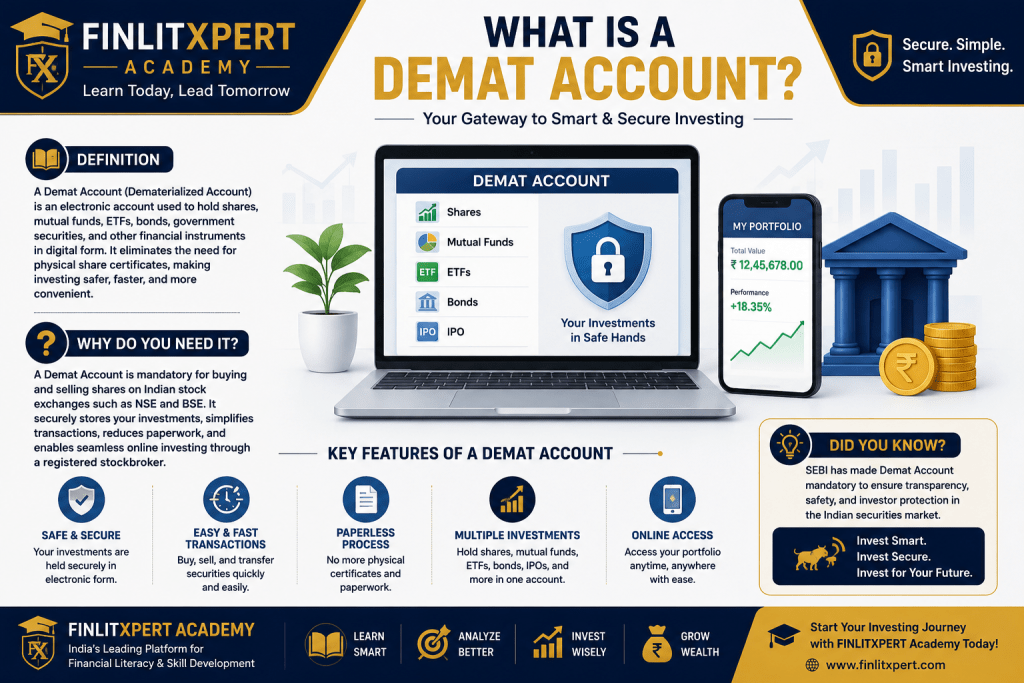
What is a Demat Account?
Definition of a Demat Account
A Demat Account is mandatory for buying and selling shares on Indian stock exchanges such as the NSE and BSE. It securely stores your investments, simplifies transactions, reduces paperwork, and enables seamless online investing through a registered stockbroker.https://www.finlitxpert.com/
Why Do You Need a Demat Account?
A Demat Account is mandatory for buying and selling shares on Indian stock exchanges such as the NSE and BSE. It securely stores your investments, simplifies transactions, reduces paperwork, and enables seamless online investing through a registered stockbroker..https://www.finlitxpert.com/
How Does a Demat Account Work?
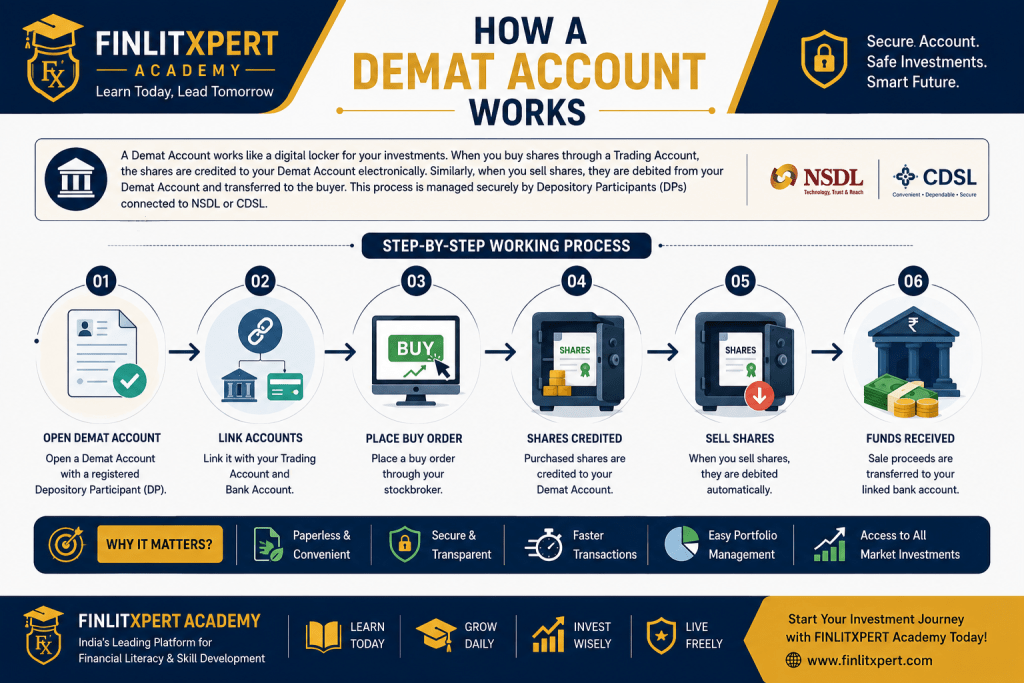
A Demat Account works like a digital locker for your investments. When you buy shares through a Trading Account, the shares are credited to your Demat Account electronically. Similarly, when you sell shares, they are debited from your Demat Account and transferred to the buyer. This process is managed securely by Depository Participants (DPs) connected to NSDL or CDSL.https://www.finlitxpert.com/finlitxpert-traderx-live-2026/
The process of using a Demat Account is simple:
- Open a Demat Account with a registered Depository Participant (DP).
- Link it with your Trading Account and Bank Account.
- Place a buy order through your stockbroker.
- Purchased shares are credited to your Demat Account.
- When you sell shares, they are debited automatically.
- Sale proceeds are transferred to your linked bank account.
Features of a Demat Account
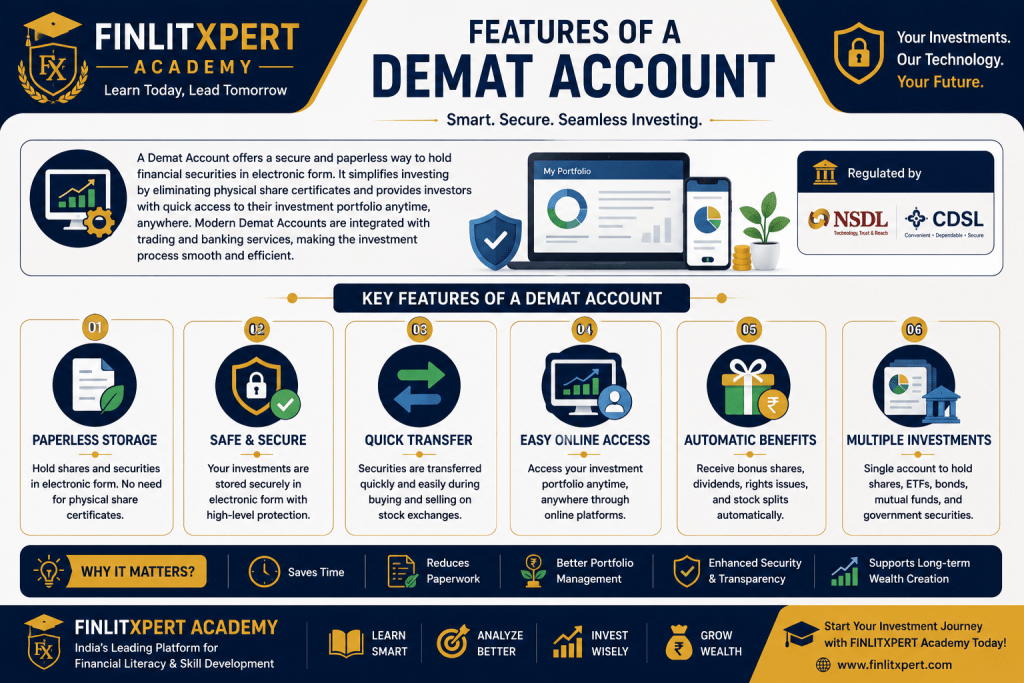
A Demat Account offers a secure and paperless way to hold financial securities in electronic form. It simplifies investing by eliminating physical share certificates and provides investors with quick access to their investment portfolio anytime, anywhere. Modern Demat Accounts are integrated with trading and banking services, making the investment process smooth and efficient..https://www.finlitxpert.com/
The major features of a Demat Account include:
• Paperless storage of shares and securities.

• Safe and secure electronic holding of investments.

• Quick transfer of securities during buying and selling.

• Easy online access to your investment portfolio.

• Automatic credit of bonus shares, dividends, and stock splits.

• Single account for shares, ETFs, bonds, mutual funds, and government securities.
Benefits of a Demat Account
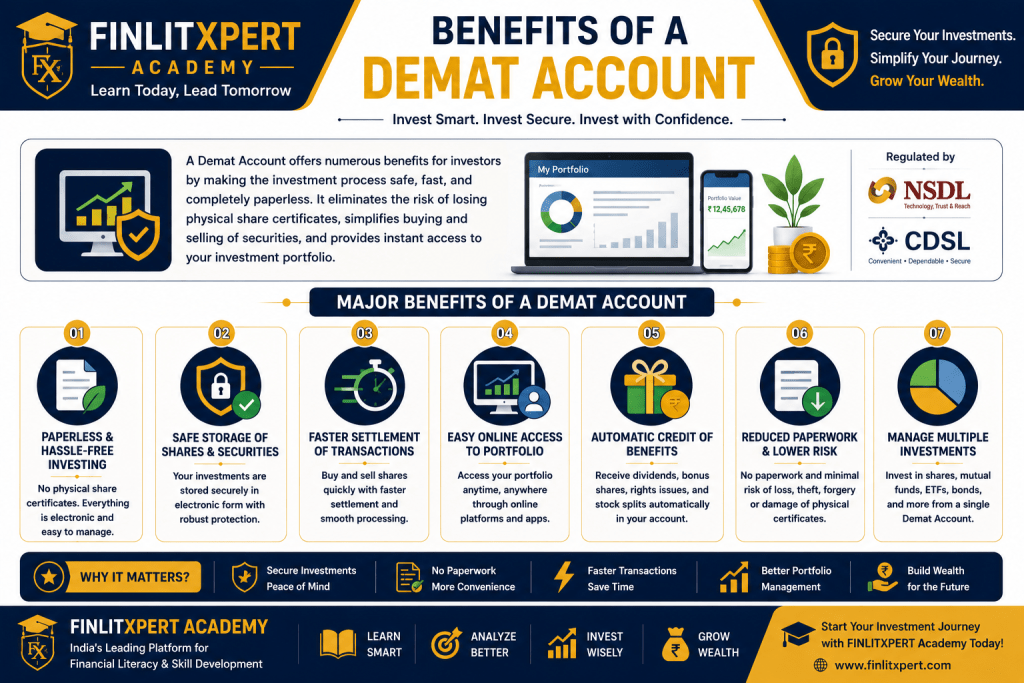
A Demat Account offers numerous benefits for investors by making the investment process safe, fast, and completely paperless. It eliminates the risk of losing physical share certificates, simplifies buying and selling of securities, and provides instant access to your investment portfolio. Whether you are a beginner or an experienced investor, a Demat Account helps you manage your investments efficiently while ensuring transparency and security..https://www.finlitxpert.com/
Major Benefits of a Demat Account
The key benefits of a Demat Account include:
- Paperless and hassle-free investing.
- Safe storage of shares and securities.
- Faster settlement of stock market transactions.
- Easy online access to your investment portfolio.
- Automatic credit of dividends, bonus shares, and stock splits.
- Reduced paperwork and lower risk of fraud.
- Convenient management of multiple investment products from a single account.
Documents Required to Open a Demat
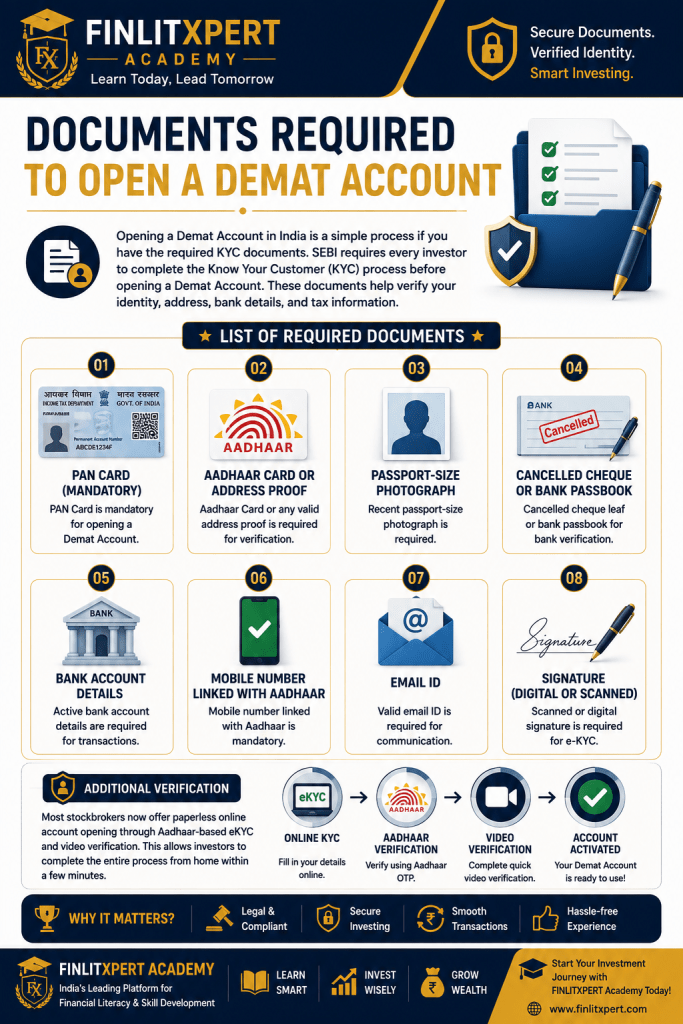
AcOpening a Demat Account in India is a simple process if you have the required KYC documents. SEBI requires every investor to complete the Know Your Customer (KYC) process before opening a Demat Account. These documents help verify your identity, address, bank details, and tax information.count
List of Required Documents
To open a Demat Account, you generally need the following documents:
- PAN Card (Mandatory).https://www.finlitxpert.com/
- Aadhaar Card or any valid Address Proof
- Passport-size Photograph
- Cancelled Cheque or Bank Passbook
- Bank Account Details
- Mobile Number linked with Aadhaar
- Email ID
- Signature (Digital or Scanned)
- FINLITXPERT TraderX Live 2026
How to Open a Demat Account in India
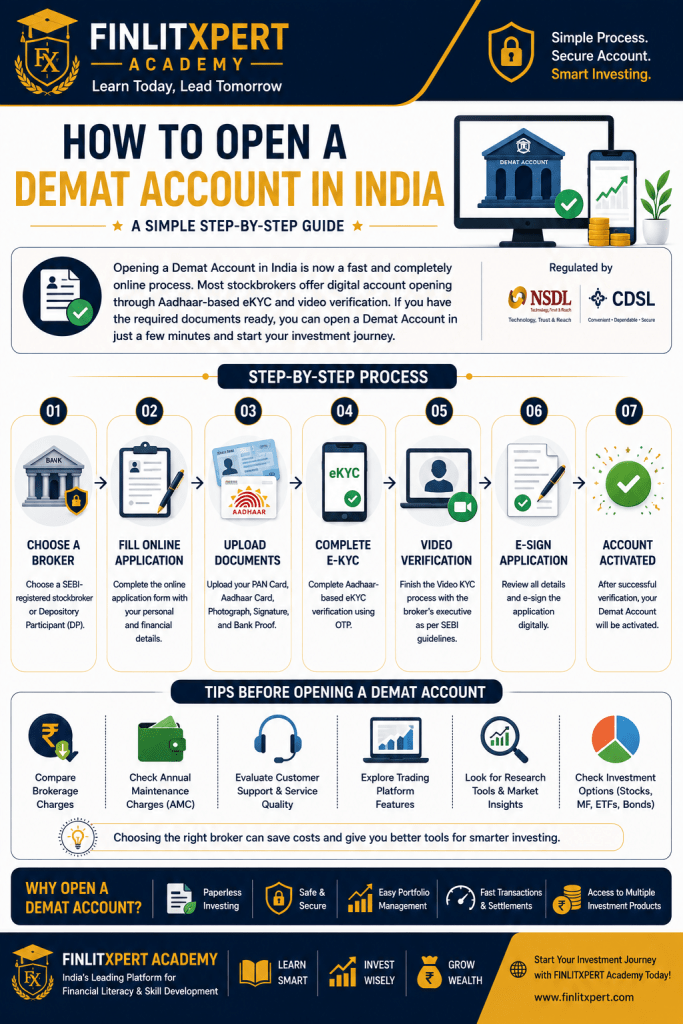
Opening a Demat Account in India is now a fast and completely online process. Most stockbrokers offer digital account opening through Aadhaar-based eKYC and video verification. If you have the required documents ready, you can open a Demat Account in just a few minutes and start your investment journey.
Step-by-Step Process
Follow these simple steps to open a Demat Account:
Step 1: Choose a SEBI-registered stockbroker or Depository Participant (DP).
Step 2: Complete the online application form.
Step 3: Upload your PAN Card, Aadhaar Card, Photograph, Signature, and Bank Proof.
Step 4: Complete Aadhaar-based eKYC verification.
Step 5: Finish the Video KYC process.
Step 6: Review and e-sign the application.
Step 7: After successful verification, your Demat Account will be activated.
Tips Before Opening a Demat Account
Before opening a Demat Account, compare brokerage charges, annual maintenance charges (AMC), customer support, trading platform features, research tools, and available investment options. Choosing the right broker can improve your overall investing experience.
Demat Account Charges
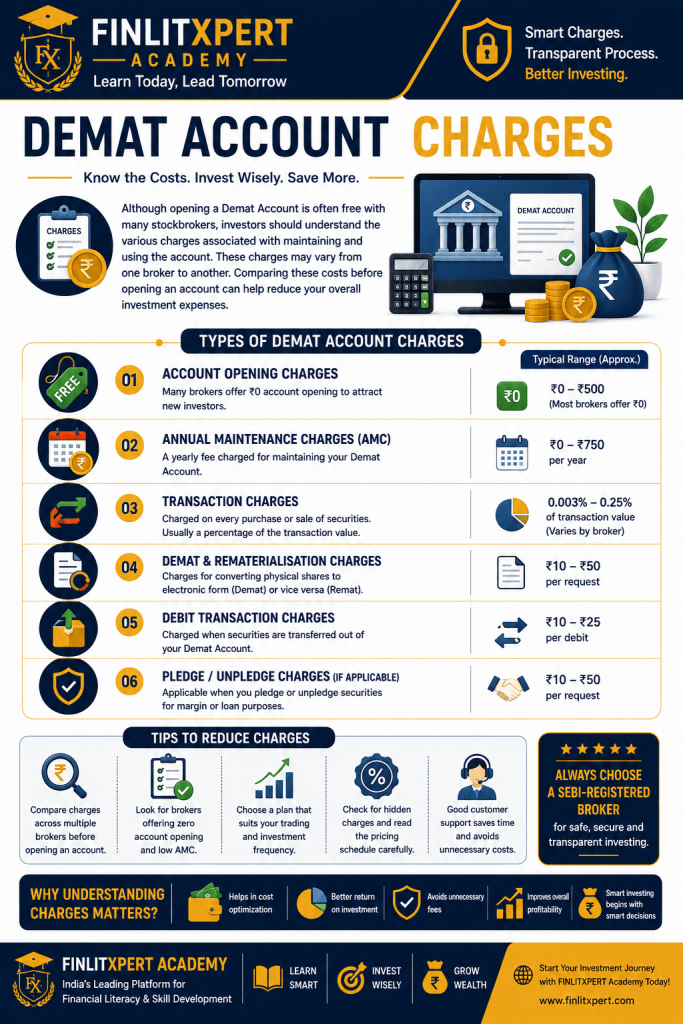
Although opening a Demat Account is often free with many stockbrokers, investors should understand the various charges associated with maintaining and using the account. These charges may vary from one broker to another. Comparing these costs before opening an account can help reduce your overall investment expenses..https://www.finlitxpert.com/
Types of Demat Account Charges
The most common charges associated with a Demat Account include:
- Account Opening Charges (Many brokers offer ₹0 account opening.)
- Annual Maintenance Charges (AMC)
- Transaction Charges for buying or selling securities.
- Dematerialisation and Rematerialisation Charges.
- Debit Transaction Charges for transferring securities.
- Pledge or Unpledge Charges (if applicable).
Tips to Reduce Charges
Choose a SEBI-registered broker that offers transparent pricing. Compare brokerage plans, AMC, and transaction charges before opening an account. Avoid hidden fees by reading the broker’s pricing schedule carefully.FINLITXPERT TraderX Live 2026
Difference Between Demat Account and Trading Account
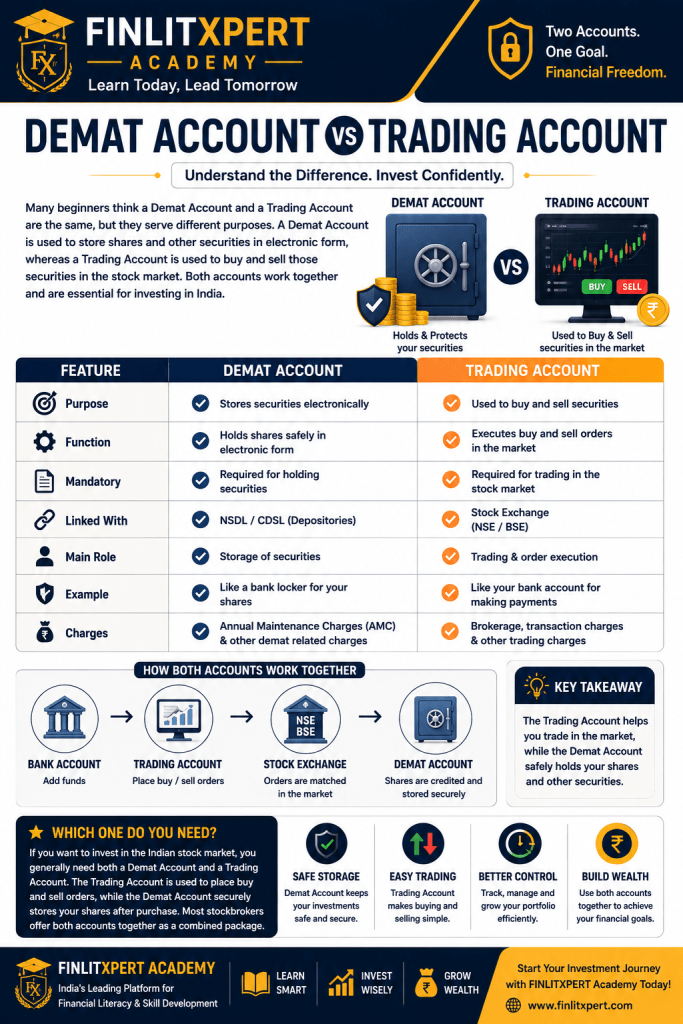
Many beginners think a Demat Account and a Trading Account are the same, but they serve different purposes. A Demat Account is used to store shares and other securities in electronic form, whereas a Trading Account is used to buy and sell those securities in the stock market. Both accounts work together and are essential for investing in India..https://www.finlitxpert.com/
Demat Account vs Trading Account
| Feature | Demat Account | Trading Account |
|---|---|---|
| Purpose | Stores securities electronically | Used to buy and sell securities |
| Function | Holds shares safely | Executes market transactions |
| Mandatory | Required for holding securities | Required for trading |
| Linked With | NSDL/CDSL | Stock Exchange (NSE/BSE) |
| Main Role | Storage | Trading |
Which One Do You Need?
If you want to invest in the Indian stock market, you generally need both a Demat Account and a Trading Account. The Trading Account is used to place buy and sell orders, while the Demat Account securely stores your shares after purchase. Most stockbrokers offer both accounts together as a combined package.FINLITXPERT TraderX Live 2026
Common Mistakes Beginners Make
Many beginners make avoidable mistakes while opening and using a Demat Account. Understanding these common errors can help you protect your investments, reduce unnecessary costs, and make smarter financial decisions from the beginning.
Common Mistakes to Avoid
- Opening a Demat Account without comparing brokers.
- Ignoring Annual Maintenance Charges (AMC).
- Not completing KYC correctly.
- Choosing a broker based only on low brokerage.
- Sharing login credentials or OTPs with others.
- Not linking the correct bank account.
- Ignoring account statements and transaction alerts.
- Investing without understanding the stock market.
- https://www.finlitxpert.com/
Best Practices
Choose a SEBI-registered stockbroker with transparent pricing, strong customer support, and a reliable trading platform. Always review your Demat Account statements regularly, keep your KYC information updated, and enable two-factor authentication to enhance account security.

Frequently Asked Questions (FAQ)
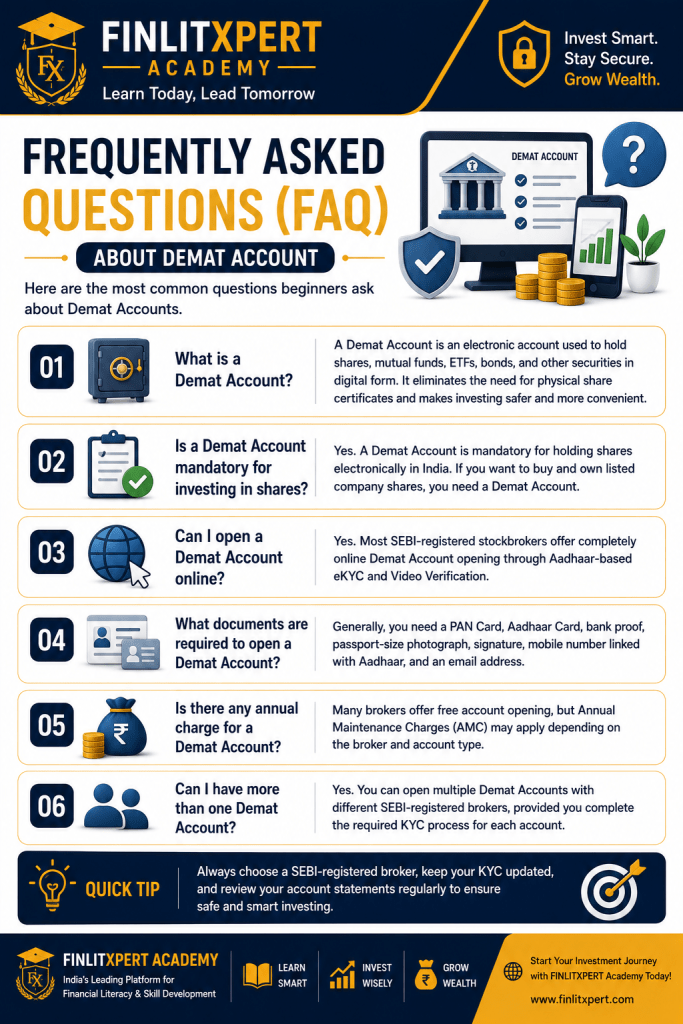
What is a Demat Account?
A Demat Account is an electronic account used to hold shares, mutual funds, ETFs, bonds, and other securities in digital form. It eliminates the need for physical share certificates and makes investing safer and more convenient.
Is a Demat Account mandatory for investing in shares?
Yes. A Demat Account is mandatory for holding shares electronically in India. If you want to buy and own listed company shares, you need a Demat Account.
Can I open a Demat Account online?
Yes. Most SEBI-registered stockbrokers offer completely online Demat Account opening through Aadhaar-based eKYC and Video Verification.
What documents are required to open a Demat Account?
Generally, you need a PAN Card, Aadhaar Card, bank proof, passport-size photograph, signature, mobile number linked with Aadhaar, and an email address.
Is there any annual charge for a Demat Account?
Many brokers offer free account opening, but Annual Maintenance Charges (AMC) may apply depending on the broker and account type.
Can I have more than one Demat Account?
Yes. You can open multiple Demat Accounts with different SEBI-registered brokers, provided you complete the required KYC process for each account.
Conclusion
A Demat Account is an essential tool for anyone who wants to invest in the Indian stock market. It provides a safe, paperless, and convenient way to hold shares and other securities electronically. By understanding how a Demat Account works, its features, benefits, charges, and account opening process, beginners can start their investment journey with confidence.
Always choose a SEBI-registered stockbroker, compare charges carefully, complete your KYC accurately, and continue learning before investing. Smart investing begins with the right knowledge and disciplined decision-making.
Learn Stock Market with FINLITXPERT Academy
Want to build a successful career in the stock market? Join FINLITXPERT Academy and learn Stock Market Basics, Technical Analysis, Fundamental Analysis, Risk Management, Options Trading, and practical investing from experienced mentors. Our beginner-friendly courses are designed to help you gain confidence and make informed investment decisions.

Learn Stock Market with FINLITXPERT Academy
Learn Share Market with FINLITXPERT Academy
Build your Share Market knowledge and develop Practical Skills with FINLITXPERT Academy. Through structured and practical learning, understand Stock Market Basics, Technical Analysis, Fundamental Analysis, Risk Management, and other essential concepts step by step.
Found this article helpful? Share your thoughts in the comments. You can also suggest topics related to the Share Market and Financial Education that you would like us to cover in our upcoming articles.